





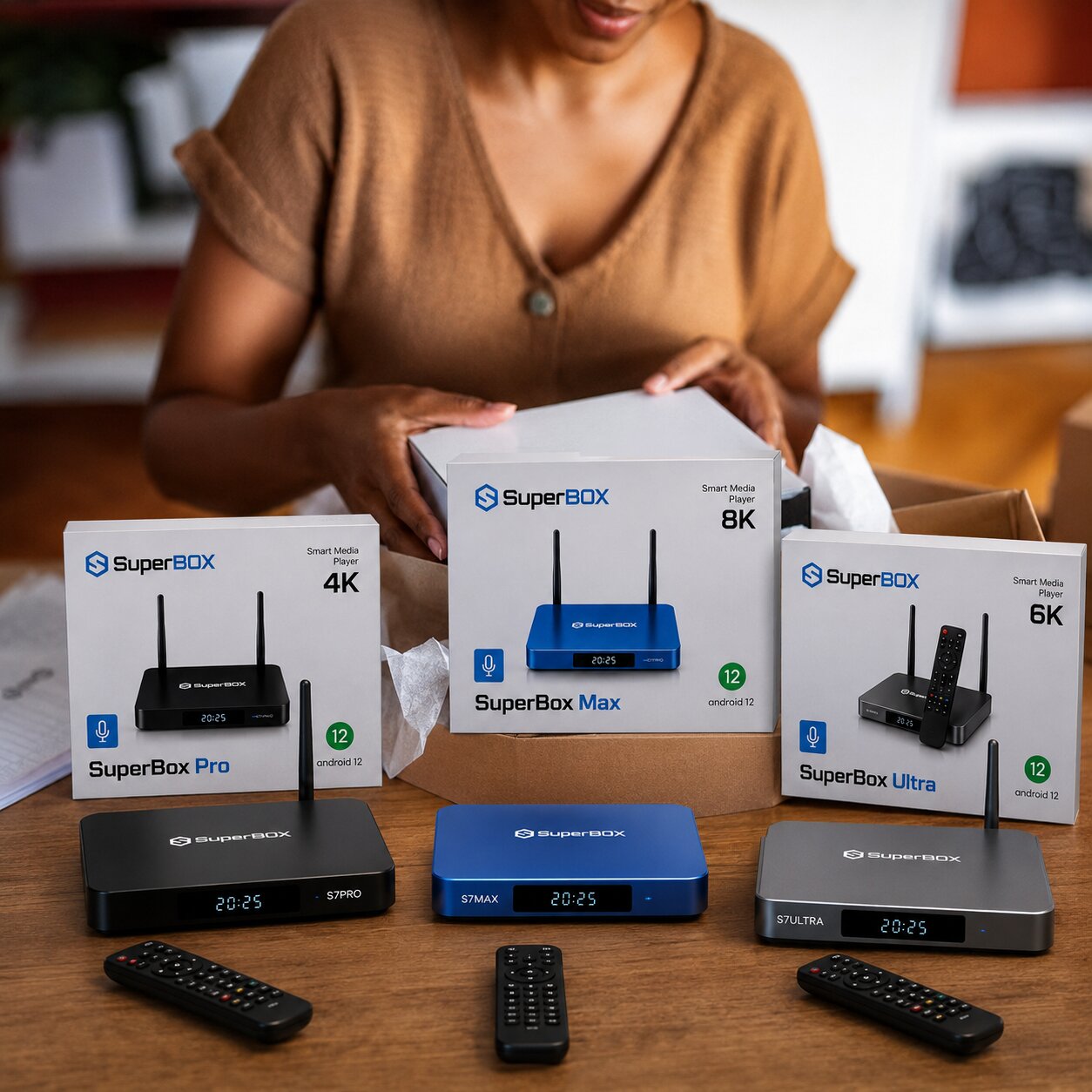
Are you wondering about the legality of the SuperBox S7 TV box? You’re not alone. Many users seek clarity on whether owning and using such devices complies with the law, especially when it comes to accessing content.
At SuperBox Official Website, an authorized dealer of SuperBox, we understand these concerns and aim to provide transparent, accurate information to help you make informed decisions. This article will delve into the legal landscape surrounding the SuperBox S7 in the US, clarifying its legitimate uses and potential risks.
What is SuperBox S7 and How Does It Work?
Defining the SuperBox S7 Series
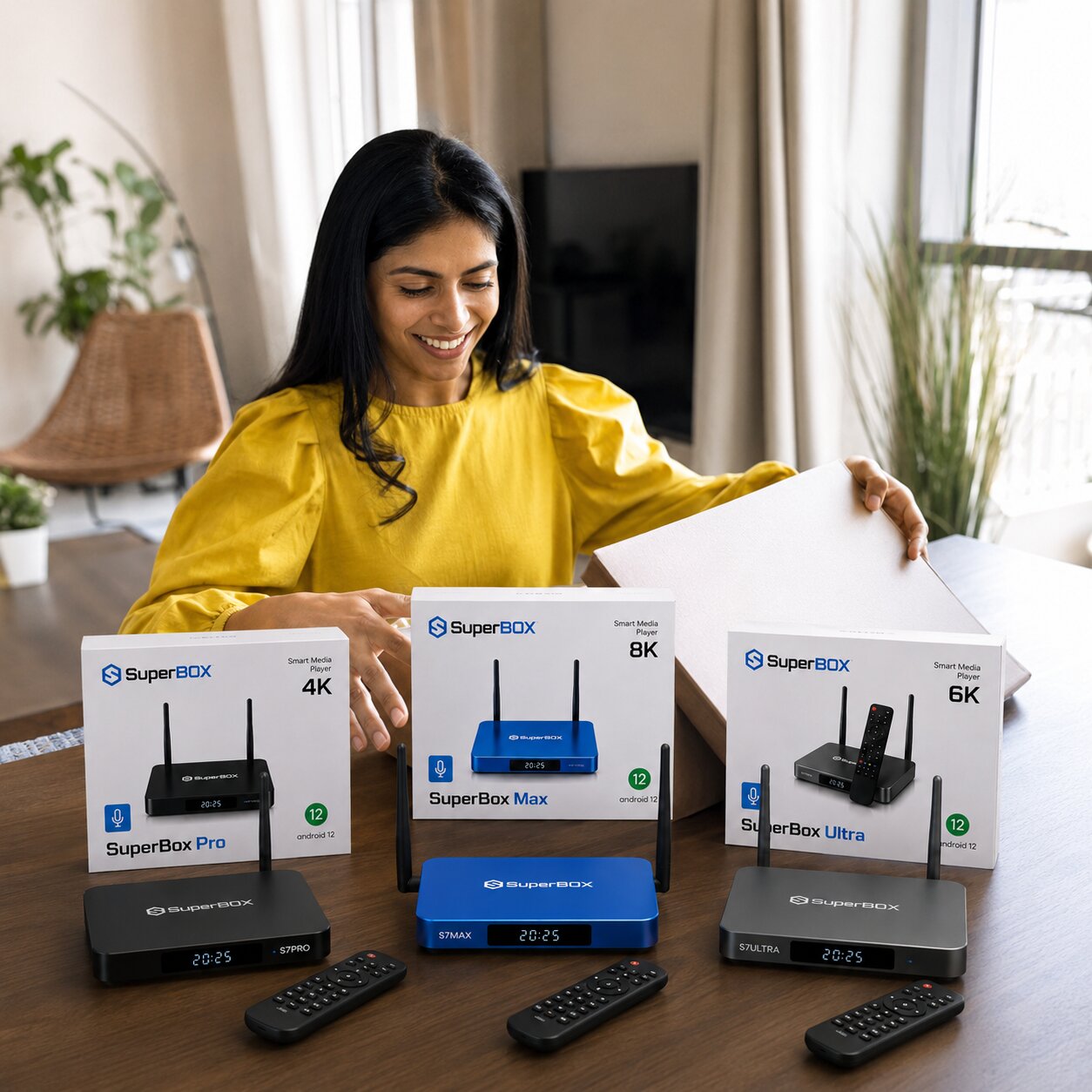
The SuperBox S7 series, including models like the S7 Pro, S7 Max, and S7 Ultra, are Android-based TV boxes designed to transform any television into a smart TV. These media streaming boxes operate on the Android operating system, allowing users to install and run a wide array of applications, much like a smartphone or tablet.
Key Features and Functionality
SuperBox S7 models offer robust hardware and advanced device capabilities. They typically feature high-definition streaming capabilities, supporting resolutions up to 6K for the S7 Pro and S7 Max, and 8K for the S7 Ultra.
These devices come equipped with powerful processors, ample RAM, and significant storage, alongside advanced connectivity options such as Wi-Fi 6 and Ethernet for fast, stable streaming. A user-friendly interface and voice control further enhance the user experience.
The “Fully Loaded” Aspect and Its Implications
The SuperBox S7 is often marketed as a “one-time purchase” solution for broad content access. This marketing frequently implies easy access to third-party applications that may provide unauthorized access to copyrighted content.
This “fully loaded” aspect, while appealing, carries significant legal implications regarding SuperBox S7 copyright infringement.
Is Owning a SuperBox S7 Legal in the US?
The Device Itself: A Generic Android TV Box
Owning a SuperBox S7 device is generally legal in the US. The SuperBox S7 is fundamentally a consumer electronic device, functioning as a generic Android TV box, similar to owning a smartphone or tablet.
Therefore, the question “Is SuperBox S7 illegal to own?” can be answered with a general no, concerning the hardware itself.
FCC Certification and Hardware Legality
Devices sold in the US, including the SuperBox S7, typically require Federal Communications Commission (FCC) certification to ensure they meet technical standards and do not interfere with other electronic devices.
This certification addresses hardware legality but does not extend to policing the legality of content streamed through the device.
The Crucial Distinction: Device Ownership vs. Content Use
The legality of the SuperBox S7 hinges on a crucial distinction: device ownership versus content use. While owning the hardware is generally legal, the legality shifts dramatically based on how the device is used, particularly concerning SuperBox S7 streaming legality.
Using the device to access unauthorized content is where legal risks arise.
Is Using SuperBox S7 for Streaming Copyrighted Content Legal?
Understanding Copyright Infringement
Using SuperBox S7 to stream copyrighted content without proper authorization is illegal and constitutes copyright infringement. Copyright law grants exclusive rights to creators, including the right to reproduce, distribute, and publicly display their works.
The Role of Third-Party Applications
Many third-party applications found on or easily accessible through devices like the SuperBox S7 provide access to content without legal content licensing. These applications facilitate illegal streaming, bypassing legitimate digital content distribution channels.
The presence and use of such apps are central to concerns about SuperBox S7 legal implications.
SuperBox’s Stance on User Responsibility
SuperBox explicitly states that it does not host, store, or distribute any media content. The company emphasizes that users bear the sole responsibility for ensuring their use of the device and its applications complies with all applicable laws.
This includes copyright and intellectual property regulations, highlighting the importance of user responsibility and due diligence.
What US Laws Govern Streaming Devices and Copyright?
US Copyright Law and Intellectual Property Rights
US Copyright Law is the primary legal framework protecting creative works. It grants copyright holders exclusive rights over their creations, prohibiting unauthorized use, reproduction, or distribution. Understanding these rights is fundamental to comprehending the legality of streaming content.
The Digital Millennium Copyright Act (DMCA)
The Digital Millennium Copyright Act (DMCA) is a key piece of legislation addressing copyright infringement in the digital age. It criminalizes the production and dissemination of technology designed to circumvent measures that control access to copyrighted works.
These measures are known as Digital Rights Management (DRM). DMCA violations can occur when devices like the SuperBox S7 are used to bypass such protections.
The Protecting Lawful Streaming Act of 2020
The Protecting Lawful Streaming Act of 2020 significantly increased criminal penalties for illegal streaming providers. While primarily targeting large-scale commercial piracy, this act underscores the US government’s strong stance against streaming piracy and its commitment to protecting intellectual property.
What Are the Legal Risks and Consequences for SuperBox S7 Users?
Internet Service Provider (ISP) Warnings and Actions
Users engaging in unauthorized streaming via SuperBox S7 may receive DMCA notices from their Internet Service Provider (ISP). Repeated copyright infringement streaming can lead to warnings, internet speed throttling, or even the termination of internet service contracts.
Potential Civil Lawsuits and Fines
One of the significant SuperBox S7 legal risks involves potential civil lawsuits from copyright holders. Damages for willful infringement can range from $750 to $30,000 per infringement.
For those who upload copyrighted materials for others to view, fines can be substantially higher, starting at $150,000. These illegal streaming penalties are a serious consequence.
Security and Privacy Concerns
Beyond legal repercussions, using unauthorized third-party applications on a SuperBox S7 poses significant security and privacy concerns. These apps may lack robust security protections, making users vulnerable to malware, viruses, data theft, and identity theft. Such piracy boxes can expose users to cybercriminals.
Lack of Recourse for Illicit Services
If illicit streaming services accessed through a SuperBox S7 fail or are shut down, users have no legal protection or recourse. Engaging in illegal activity means there is no consumer protection or avenue for refunds or support for services that cease to operate.
How Can I Use an Android TV Box Legally?
Focus on Legitimate Content Sources
To use an Android TV box legally, including a SuperBox S7, you must focus solely on legitimate content sources. This means only accessing content from authorized providers that have the proper content licensing agreements. This is how to legally use a SuperBox S7 TV box.
Installing Apps from Official App Stores
Always install applications from official app stores, such as the Google Play Store or other legitimate marketplaces. These platforms vet apps for security and legality, ensuring you are accessing authorized digital content distribution.
User Responsibility and Due Diligence
Exercising user responsibility and due diligence is paramount. This involves understanding the terms of service for any streaming platform and verifying content licenses to ensure you are consuming media legally.
What Are Legal Alternatives to SuperBox S7 for Streaming?
Subscription-Based Streaming Services
Numerous legal alternatives to SuperBox S7 for streaming offer a vast array of content. Subscription services like Netflix, Hulu, Disney+, Amazon Prime Video, Max, and YouTube TV provide legitimate, licensed content with excellent quality and reliability.
Free, Ad-Supported Streaming Platforms
For those seeking free streaming devices or content, several legal, ad-supported streaming platforms are available. Services such as Peacock (free tier), Tubi, Pluto TV, and Crackle offer a wide selection of movies and TV shows legally, supported by advertisements.

Digital Purchases and Rentals
Another legal option is to purchase or rent digital content. Platforms like Amazon Prime Video, Google Play Movies, and Apple TV allow users to buy or rent individual movies and TV show episodes, providing legal access to desired content without a subscription.
Frequently Asked Questions (FAQ)
Is SuperBox S7 considered a piracy device?
The SuperBox S7 itself is a generic Android TV box. However, when marketed and primarily used to access unauthorized copyrighted content through third-party applications, it functions as a piracy box.
Can I get in trouble for using SuperBox S7?
Yes, you can get in trouble for using SuperBox S7 if you use it to stream copyrighted content without authorization. This can lead to legal risks, including civil lawsuits, fines, and actions from your Internet Service Provider.
Are there legal SuperBox S7 channels?
Yes, there are legal SuperBox S7 channels and applications. The SuperBox S7 can access any legitimate app available on official app stores, such as YouTube or Netflix. The legality depends entirely on the content source and its licensing.
What are the legal risks of owning a SuperBox S7?
The legal risks primarily stem from its use for copyright infringement, not its ownership. These risks include ISP warnings, potential civil lawsuits with substantial fines, and exposure to security and privacy vulnerabilities.
Where is SuperBox S7 legal to operate?
The hardware is legal to operate in the United States, provided it meets FCC regulations. However, its legal operation for streaming is restricted to accessing only legitimately licensed content from authorized sources.